Introduction
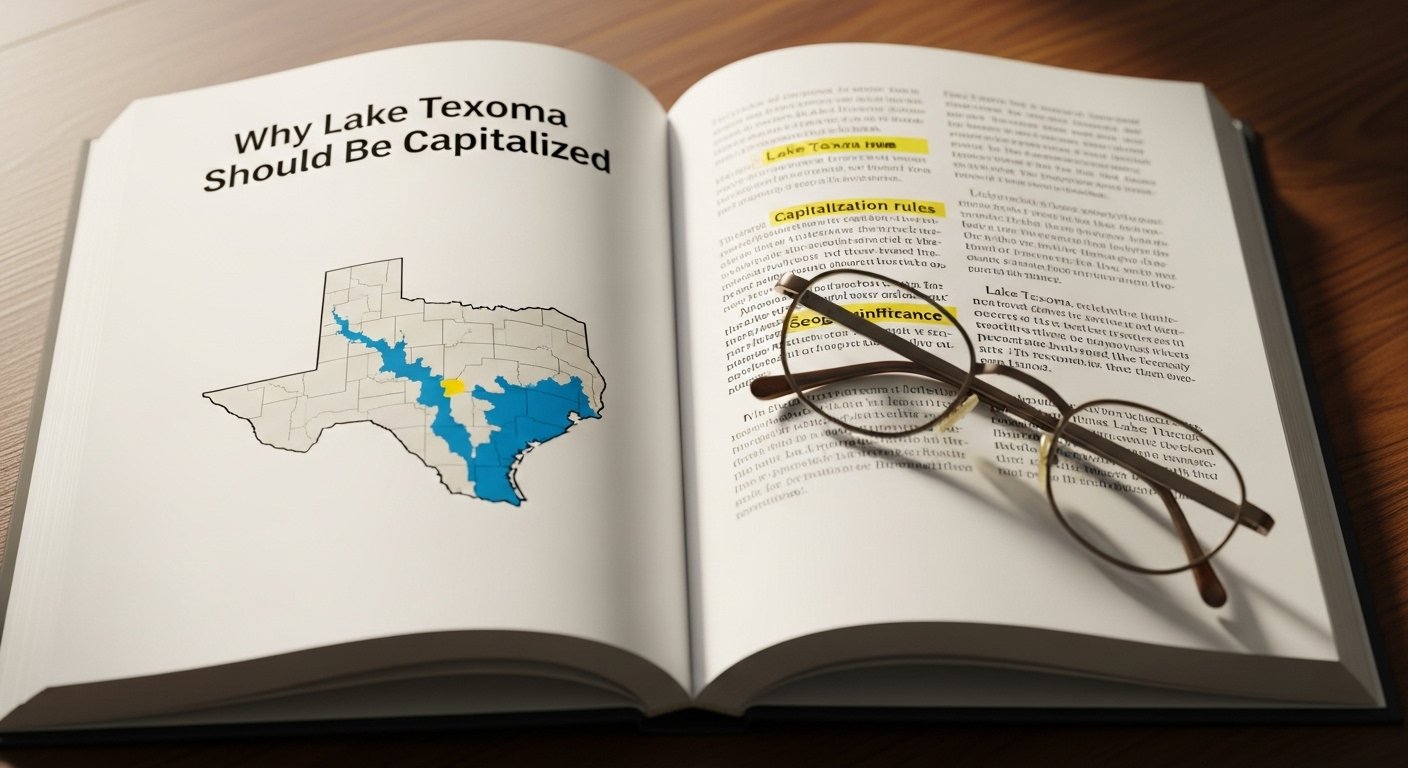
Have you ever noticed how some place names get capital letters while others don’t? It might seem like a small detail, but it’s actually pretty important. Today, we’re going to talk about why “Lake Texoma should be capitalized“, and why doing so helps with respect, clarity, and even search engine results!
Yes, it’s just a lake. And yes, it’s just a name. But names carry meaning, history, and identity. When we skip capitalizing names like Lake Texoma, we lose a bit of that power — and we might confuse people too.
In this fun and friendly guide, we’ll explore everything you need to know about why Lake Texoma should be capitalized. We’ll keep things simple, clear, and easy to understand — even for a fifth grader!
So buckle up — because grammar and geography are about to get exciting.
What Is Lake Texoma?
Lake Texoma is a large man-made lake located right on the border of Texas and Oklahoma — hence the name Texoma. It’s a popular spot for boating, fishing, and camping. Some locals call it “Texoma Lake,” while others just say “the lake.”
But no matter what you call it, Lake Texoma is a proper noun, and that means it deserves capital letters. Using lowercase, like “lake texoma,” is not only incorrect — it also looks unprofessional and careless.
Think about it — would you write “statue of liberty” in lowercase? Probably not. So, just like other important places, Lake Texoma should be capitalized every time.
Capitalization Basics: When and Why We Use Capital Letters
Let’s keep it simple. In English, we capitalize proper nouns. What’s a proper noun? It’s a specific name for a person, place, or thing.
For example:
- New York is capitalized because it’s a specific city.
- Lake Michigan is capitalized because it’s a specific lake.
- Mount Everest is capitalized because it’s a specific mountain.
So what about our favorite border lake? Yup – “Lake Texoma should be capitalized” because it’s a specific lake with a unique name.
Using capital letters shows respect for the name and keeps your writing clear and correct.
Common Grammar Mistakes People Make with Place Names
People often forget to capitalize place names, especially in casual writing like texts, social media, and emails. Here are a few frequent slip-ups:
- Writing “lake texoma” instead of Lake Texoma
- Saying “lake of the ozarks” instead of Lake of the Ozarks
- Using “grand canyon” instead of Grand Canyon
When we don’t capitalize properly, it can make our writing look sloppy. It can also confuse readers or cause mistakes in directions, maps, or travel documents.
So if you’re writing about Lake Texoma, whether in a blog post or school report, remember: Lake Texoma should be capitalized!
Why Geography Names Need Capital Letters
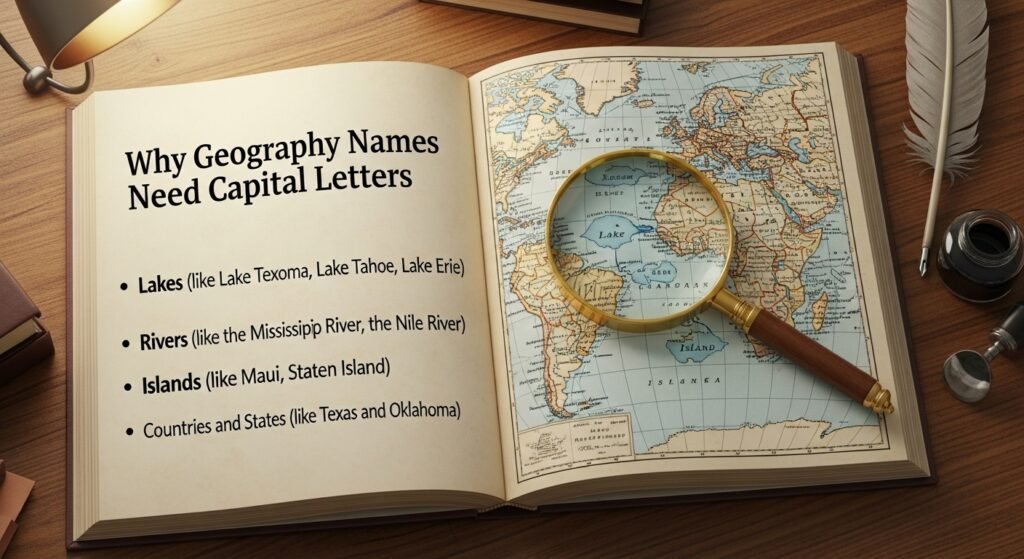
Geographic names like cities, rivers, and mountains always need to be capitalized. That includes:
- Lakes (like Lake Texoma, Lake Tahoe, Lake Erie)
- Rivers (like the Mississippi River, the Nile River)
- Islands (like Maui, Staten Island)
- Countries and States (like Texas and Oklahoma)
These names are part of what we call proper nouns. They’re one-of-a-kind places on the map. You wouldn’t write “united states of america” in all lowercase, right? It looks weird!
So next time you write about a special place like Lake Texoma, just remember — capital letters count.
Real-Life Examples: How Proper Capitalization Builds Trust
Imagine you’re reading a travel article, and it says:
“We had a great time fishing at lake texoma last summer…”
Yikes! That little mistake — no capital letters — makes it look like the writer didn’t proofread or care about grammar. Not very trustworthy, right?
Now read this:
“We had a great time fishing at Lake Texoma last summer…”
Much better! It looks professional, polished, and clear. It may be a small change, but it makes a big difference — especially in writing that people read online, in books, or in newspapers.
Remember, Lake Texoma should be capitalized every time you’re writing for others to see.
How This Affects SEO (Search Engine Optimization)
Here’s something Google cares about too: proper capitalization!
If you’re writing online content like blogs, articles, or reviews, using the right capitalization helps search engines understand your topic. That means:
- You rank higher on search results
- People trust your content more
- Google knows you’re writing about a real place, not just random words
If you type “lake texoma” into Google, it still shows the right results — but search engines check things like grammar and structure to judge quality. If your whole article is in lowercase, it probably won’t rank well.
So if you’re a blogger or content creator, here’s a pro tip: Lake Texoma should be capitalized to improve clarity and boost your SEO!
What Does the Official Style Guide Say?
Many professional style guides, such as the Associated Press (AP) Stylebook and the Chicago Manual of Style, offer strict rules on capitalization.
Here’s what they all agree on:
Always capitalize the full names of geographical places.
That includes lakes, rivers, valleys, mountains, and any other kind of location. So yes, according to every official writing rule out there, Lake Texoma should be capitalized.
Even schoolteachers, editors, and journalists follow this rule — because it’s basic grammar and good writing.
Importance of Teaching Kids Proper Capitalization
Teaching children about proper names and capitalization helps them:
- Learn grammar rules faster
- Write clearly and correctly
- Understand geography better
- Prepare for success in school and life
When kids write “lake texoma,” it’s a chance to correct them and say, “Hey! That’s an important place. So we give it important letters.”
By showing kids how to write names correctly, we’re helping them become better readers and writers. And yes, reminding them that Lake Texoma should be capitalized helps with both grammar and geography!
Travel Blogs and Tourism: Details Matter!
If you’re writing a travel blog or promoting tourism at Lake Texoma, clean writing matters. Readers trust websites that use correct grammar and spelling.
You want your destination to look professional and inviting. Sloppy writing can turn people away. So:
- Always capitalize Lake Texoma
- Use facts and local tips
- Keep your tone friendly and helpful
A high-quality article about Lake Texoma fishing or camping should reflect the beauty and value of the place. Capitalization isn’t just for grammar nerds — it’s how we show respect to names that matter.
Building Respect for Local Landmarks
Lake Texoma is more than just a lake — it’s a place full of memories, community pride, and natural beauty. Local residents care about it deeply.
So when talking about their home or favorite destination, naming it properly shows respect. Writing “lake texoma” without capital letters can feel dismissive or lazy.
Show your readers — and the locals — that you care. Lake Texoma should be capitalized every time because it’s not “just a lake.” It’s Lake Texoma, with history, culture, and character.
The Power of One Capital Letter
Think one letter doesn’t matter? Think again!
Changing “lake texoma” to Lake Texoma is like:
- Turning a doodle into art
- Dressing up for a big occasion
- Giving a place the attention it deserves
It may just be one capital “L” and “T,” but that small change helps your message feel more trustworthy, mature, and respectful.
Don’t skip over little grammar rules — they add up in big ways!
FAQs
Q1: Is “lake texoma” ever correct in lowercase?
A: No, it’s not. “Lake Texoma” is a proper noun, and it should always be capitalized.
Q2: What if I’m writing casually in a text or tweet?
A: Even in casual writing, it’s best to capitalize proper names. It sets a good habit.
Q3: Is Texoma a real word?
A: Yes! “Texoma” is a blend of Texas and Oklahoma, where the lake is located.
Q4: Do other lakes follow the same rule?
A: Yes. Lake Tahoe, Lake Michigan, and Lake Erie are examples. All lake names are capitalized.
Q5: Will bad capitalization hurt my SEO?
A: Definitely. Google can tell when writing is low-quality, and bad grammar lowers your search ranking.
Q6: What’s the best way to teach kids about this?
A: Use real maps, fun quizzes, and talk about local places like Lake Texoma. Make grammar feel fun and useful!
Final Thoughts
So, what have we learned? Well, first of all: Lake Texoma should be capitalized, always.
It’s not just a rule in a boring grammar book. It’s about respect, clarity, readability, and even search engine power. Whether you’re a blogger, student, traveler, or local proud of their home, using correct capitalization shows you care.
Let’s give this beautiful place the attention it deserves by writing its name the right way. Starting today, let’s ALL capitalize Lake Texoma — proudly, clearly, and correctly.