Table of Contents
Introduction
Ever watched a movie or TV show and wondered who sets up the lights or moves the big camera rigs around? That’s the job of a grip technician! While they may not be in front of the camera, they play a huge role in how everything looks behind the scenes.
A grip technician works on film sets, helping to set up equipment, support the camera crew, and work with lights. They make sure shots are steady. They build rigs and platforms. They even control lighting shadows and reflections. Their work helps directors and cinematographers bring their vision to life.
In this article, we’ll explore what a grip technician does, how they help, what skills they need, and how to start a career in this exciting, hands-on job. Whether you’re curious about working in movies or just want to know more about film crews, this guide is for you!
What Does a Grip Technician Do on Set?
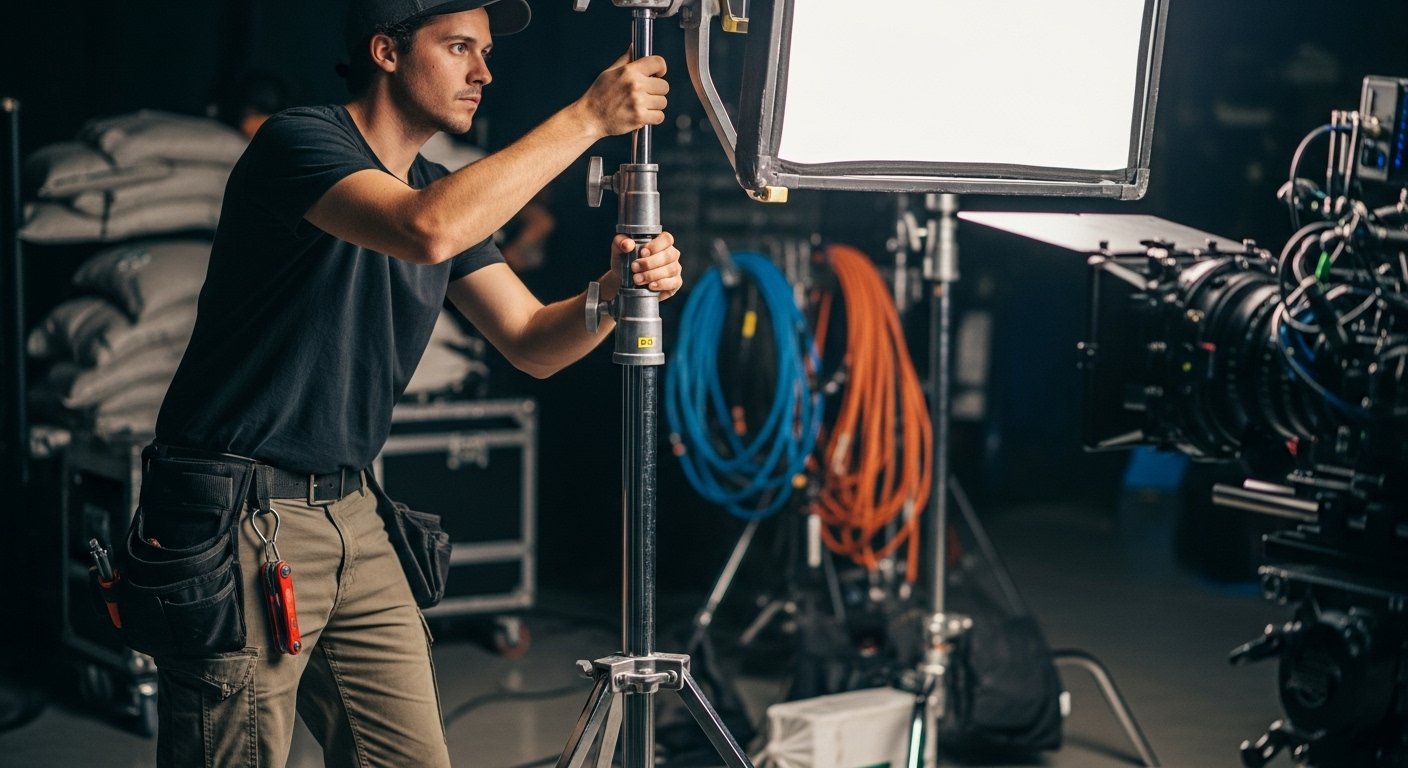
A grip technician sets up and controls equipment that holds cameras, lights, screens, and other gear. They build things like rigs, scaffolding, and dollies—anything that helps the camera move or stay in one place.
Grips don’t usually handle the camera itself. Instead, they work with the camera and lighting departments to support their needs. For example, if a shot needs a smooth moving camera, grips set up tracks or stabilizers. If a light is too harsh, grips adjust flags and nets to soften it.
They work quietly but are always nearby—ready to fix, adjust, or build what’s needed next. Without grip technicians, many of your favorite movie scenes wouldn’t look so smooth or real.
Key Roles Under the Grip Technician Title
In the film world, “grip” isn’t just one person. There’s a whole team of grip technicians, each with their own job. Here’s a breakdown:
- Key Grip: The boss of the grip team. Works closely with the director of photography (DP) to plan shots and rig setups.
- Best Boy Grip: The right-hand person to the key grip. Organizes crew, keeps gear ready, and manages tasks.
- Dolly Grip: Operates the dolly—a moving platform for the camera. Keeps shots smooth and steady.
- Set Grip: General team members who build rigs, adjust lights, and set up gear.
Every grip technician plays a part in making each shot perfect. From large outdoor shoots to small indoor scenes, grips are always at work behind the camera.
Tools and Gear a Grip Technician Uses
Grip technicians work with tools every day—just like builders or mechanics. Their toolbox can include both small hand tools and big, heavy equipment.
Common grip tools include:
- C-clamps and G-clamps (to attach gear to lots of different surfaces)
- Flags and silks (used to block or soften light)
- Apple boxes (wooden boxes used to raise actors or props)
- Light stands
- Rigging gear (like trusses, booms, and arms)
- Track for dolly shots
- Safety harnesses and ropes for building support systems
Experienced grips know how to keep things safe, strong, and adjustable. Their setups must hold heavy cameras and lights—so knowing their gear well is very important.
How Grip Technicians Work with Other Film Crew Members
No one makes a movie alone. Grip technicians work with many other people on set to get things done.
They often work closely with:
- Camera operators – to build support systems for difficult angles or moving shots
- Lighting crew (gaffers) – to cut, bounce, or block light
- Directors and cinematographers – to plan each shot’s style and movement
- Actors – to ensure rigs don’t get in the way or distract from performances
- Sound crew – so mics aren’t blocked or hit by boom arms or setups
Teamwork is a huge part of a grip technician’s day. Communication is also key. Everyone needs to be on the same page to keep the set safe and the filming smooth.
What Skills Does a Grip Technician Need?
Being a grip technician is hands-on work. You need to be strong, smart, and ready to problem-solve.
Here are the top skills a grip technician should have:
- Mechanical skill – Know how to use tools and build safely
- Physical strength – Lifting and moving heavy gear all day
- Teamwork – Working closely with others in a fast-paced space
- Creativity – Finding unique ways to solve on-set problems
- Attention to detail – Every setup must be precise and safe
- Quick thinking – Filmmaking moves fast. You must act fast too!
Grips are like backstage heroes. They often work in tough conditions—like rain, night shoots, or cold places—but they stay focused and keep things running smoothly.
A Day in the Life of a Grip Technician
So, what’s a grip technician’s daily life like during a film shoot?
Here’s a basic rundown:
- Arrive early: Set up all the gear before filming starts
- Prep the scene: Build camera rigs or light supports
- Help film: Stay alert and help with every new camera shot
- Adjust rigs: If the director changes a plan, they adjust quickly
- Keep it safe: Make sure no one trips over wires or falls from scaffolding
- Wrap up: Tear down gear, pack up trucks, and check inventory
Grips may work long days. Shoots can last 10–14 hours, depending on the project. But for people who love working with their hands and being part of a creative team, it’s deeply rewarding.
Where Do Grip Technicians Work?
Grip technicians mostly work in the entertainment industry. This includes:
- Movie sets
- TV studios
- Commercial shoots
- Documentary filming
- Live events (like concerts or shows)
- Streaming services
Some gigs are on-location—outside, in cities, or in nature. Others are inside sound stages or green screen rooms. Many grips travel a lot, especially for big productions.
There are also union and non-union jobs. If you’re in the U.S., joining a film crew union (like IATSE) can offer steady work and benefits.
How to Become a Grip Technician
Want to become a grip technician? The good news is you don’t need a college degree to start. Most grips begin by learning on the job.
Here’s how to begin your journey:
- Start as a production assistant (PA) on smaller shoots
- Offer to carry gear and learn from others
- Take safety training – Some sets require it
- Build basic tool and rigging skills
- Network with camera crews, grips, and gaffers
- Move up to set grip, best boy, then key grip roles
Some cities have film schools or technical workshops for grips. These are helpful, but real experience is the best teacher in this role. Stick with it, stay safe, and ask lots of questions.
Career Growth and Pay for Grip Technicians
Grip technicians can build strong careers over time. As they gain skills, the jobs—and pay—can improve.
Salaries depend on:
- Location
- Union or non-union status
- Your experience
- The type of production (TV, film, commercials)
On average:
- Set grips can earn around $20–$30 an hour
- Best boy grips may earn $30–$40 an hour
- Key grips on high-budget sets can earn $60,000–$100,000+ per year
Freelance grips may also get per-day or per-project pay. The more people you know and the more skills you have, the more work you’ll find.
Safety on Set – A Big Part of the Grip Technician’s Job
A grip technician must keep the set safe—not just for themselves but for everyone around. Heavy lights, tall scaffolds, and long wires can be dangerous if not handled properly. That’s why training and safety checks are a big deal.
Grips often:
- Wear gloves, hard hats, or harnesses
- Double-check that gear is secure
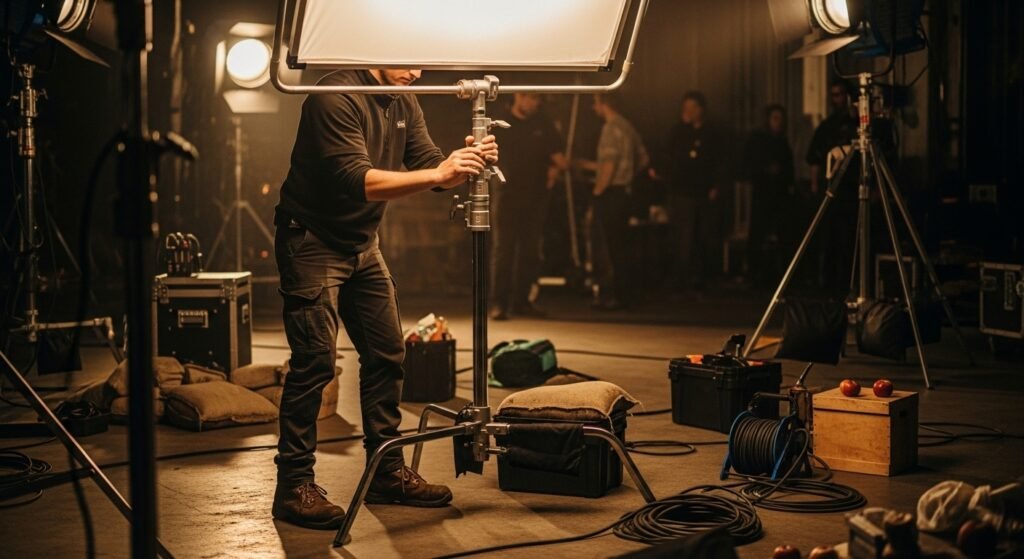
- Use sandbags on stands
- Keep paths clear for actors and crew
- Stay alert while rigs or cranes are moving
Being safe also earns trust. Directors and producers rely on grips to deliver strong work without creating hazards. It’s one more reason why good grips are always in demand.
Grip Technician Jobs Around the World
The film industry is global—and grip technicians are needed almost everywhere. Hollywood isn’t the only place with movie sets. Big productions happen in:
- Vancouver and Toronto (Canada)
- London and Pinewood Studios (UK)
- Sydney and Melbourne (Australia)
- Berlin and other parts of Germany
- South Africa, New Zealand, India, and more
Many countries follow similar film crew structures, so your grip skills can take you worldwide if you’re willing to travel.
Real-Life Story: From Film Fan to Key Grip
Meet Alex, 28, from Atlanta. He started out as a PA on a documentary. He carried lights, ran errands, and made coffee. But he always watched the grips. Over time, he asked questions, helped lift gear, and learned how the equipment worked.
Fast forward five years: Alex is now a best boy grip on action film sets. He’s helped with car scenes, stunts, and tricky camera angles. It’s hard work, but he says:
“Every shoot feels different. I love being behind the scenes and knowing I helped make the magic happen.”
Stories like Alex’s show that grip technicians are real people who became pros through passion and effort.
FAQs
1. Do grip technicians move cameras?
No, they support the rigs that move or hold cameras. Operators handle the camera itself.
2. Is being a grip physically demanding?
Yes. It involves lifting heavy gear, climbing, and staying on your feet all day.
3. Can someone with no experience become a grip technician?
Yes! Many start as assistants and learn on the job. Curiosity and hard work go a long way.
4. Are grip and gaffer the same thing?
No. Gaffers manage lighting and electric setups. Grips support camera movement and rigging.
5. Do grip technicians get credit in films?
Yes, often near the end of the credits under “Grip Department.” Sometimes by name, sometimes as a team.
6. What’s the difference between key grip and dolly grip?
Key grips run the grip team, while dolly grips operate camera dollies for smooth moving shots.
Conclusion
The magic of movies doesn’t happen without a solid foundation—and that foundation is often built by grip technicians. From start to finish, they hold the pieces together (literally). They keep cameras steady, make lights behave, and build the gear that brings scenes to life.
If you love working with your hands, solving physical problems, and being part of something creative, this job might be your perfect fit. More than just a behind-the-scenes role, becoming a grip technician means becoming part of the team that helps make movie magic.