Table of Contents
introduction
Want to work with guitars for a living? Then learning how to become a guitar tech might be the perfect path for you. A guitar tech is someone who takes care of guitars for musicians. That includes tuning, fixing, setting up gear, and making sure everything works before a concert starts.
Some guitar techs work in music stores or at small venues, while others travel the world with big bands. Either way, the job is fun, hands-on, and full of music. If this sounds like your style, keep reading to learn how to become a guitar tech, step by step.
Why Learning How to Become a Guitar Tech Is a Smart Choice
You might wonder, “Is it easy to figure out how to become a guitar tech?” It can be, especially if you’re willing to practice and learn over time.
Here are some reasons why people choose this career:
- You get to be around music and musicians every day
- You don’t need a college degree
- It’s creative and never boring
- You can grow from local shows to major tours
- You’ll always be learning something new
Once you understand how to become a guitar tech, your skills can take you places you never expected—from backstage to sold-out shows!
Start Exploring Guitars to Learn How to Become a Guitar Tech
If you’re curious about how to become a guitar tech, your first step is to understand the instrument. Start by learning the parts of a guitar—neck, bridge, frets, pickups, and tuners.
You should:
- Practice tuning guitars
- Watch how strings are changed
- Learn about acoustic and electric guitars
- Explore amps and pedals
You don’t have to be a great guitar player. But knowing basic chords, notes, and parts can really help you understand what a musician wants.
When you’re starting out, work on any guitar you can. Borrow one. Buy a cheap second-hand model. Take it apart. Put it back together. That’s how you begin learning how to become a guitar tech.
Learn Setup Skills Early in Your Guitar Tech Journey
To truly know how to become a guitar tech, you must know how to do a “setup.” This means adjusting a guitar so it plays perfectly for the person who uses it.
A typical setup involves:
- Adjusting the truss rod for neck shape
- Setting string height
- Changing or choosing the right string type
- Fixing sharp frets
- Checking for buzz or bad tone
Every player wants their guitar to feel just right. Knowing how to listen and adjust makes you valuable. These are key guitar tech skills that help build trust with musicians.
If you practice guitar setups on your own time, you’re already on the path of how to become a guitar tech.
Use Great Tools as You Learn How to Become a Guitar Tech
If you want to discover how to become a guitar tech, you’ll need the right tools. Luckily, you don’t have to spend a lot at first. Start small and build over time.
Your starting tool kit might include:
- Peg winder and string cutter
- Allen wrenches
- Truss rod tool
- Soft cloth for cleaning
- Digital tuner
- Screwdrivers
- Ruler or string height gauge
As you improve, you can learn to use:
- Soldering irons for electronics
- Fret files for in-depth repair
- Nut slotting tools
- Multimeter for testing wires
The more tools you know, the better you’ll understand how to become a guitar tech who can handle anything.
Practice on Real Guitars While Learning How to Become a Guitar Tech
Nothing beats hands-on experience. One great way to master how to become a guitar tech is by helping people you know. Friends. Family. Local players.
Offer to:
- Change strings for free
- Sparkle-clean fretboards
- Tune-up old guitars
- Adjust action and pickups
- Diagnose weird guitar sounds
Record the results. Ask for feedback. Over time, you’ll gain confidence and real skill. Eventually, people will start calling YOU when their guitar needs help.
Getting real practice is a big step forward in your journey of how to become a guitar tech.
Understand Electronics to Truly Become a Great Guitar Tech
If you’re serious about how to become a guitar tech, try learning about basic guitar electronics. Electric guitars and basses need more than string care—they have pickups, jacks, switches, and wires inside.
Here’s what to learn:
- How to solder
- How to fix a broken pickup wire
- How to replace guitar pots or switches
- How tone knobs actually work
- What type of pickup causes what sound
You don’t need to be an electrical wizard. But basic soldering and electronics give you a big boost in credibility. It also helps fix issues quickly—especially at shows.
Techs who understand electronics stand out when learning how to become a guitar tech.
Take Guitar Tech Courses to Learn Faster
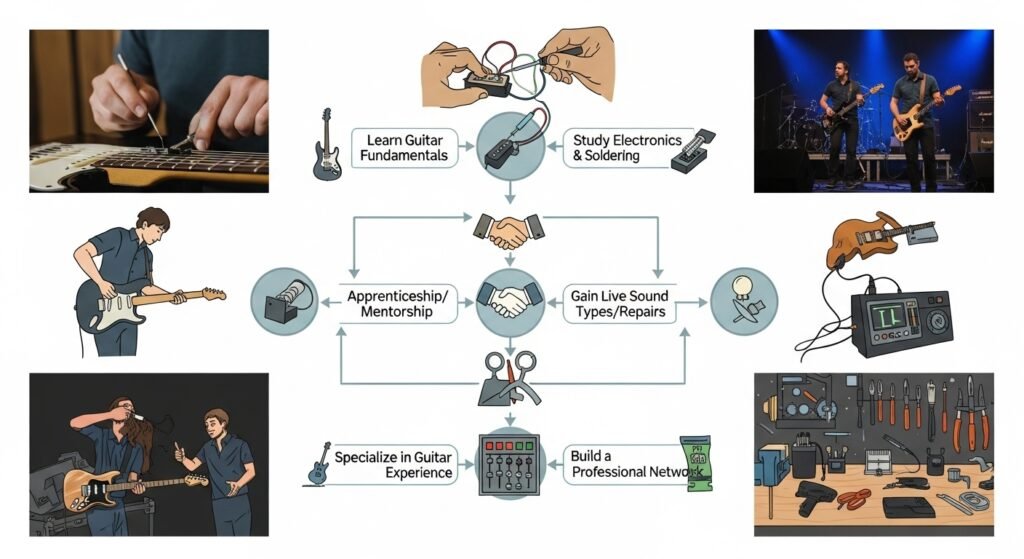
You can absolutely learn how to become a guitar tech through free info and practice. But some people also benefit from structured classes.
Look for:
- Online guitar tech courses (many are beginner-friendly!)
- Weekend classes at music stores
- Local workshops on guitar repair
- Luthier school paths (for deeper training)
These programs will teach you things like fret repair, bridge replacement, and even painting or wiring techniques.
Courses also help you meet others on the same path, which is great for networking as you move further into the world of how to become a guitar tech.
Work in a Music Store to Learn How to Become a Guitar Tech
Some guitar techs begin their careers at a music shop. It’s a great place to observe and help while getting paid.
Music stores offer chances to:
- Practice guitar setups
- Help repair used inventory
- Talk with real customers
- Handle all kinds of gear
- Learn how customers expect a guitar to feel
Once you work in a shop, your knowledge and workload grow fast. And when people trust you in one place, word spreads.
If you’re seriously learning how to become a guitar tech, working at a music store could be your best first job.
Build Your Own Tech Kit While Learning How to Become a Guitar Tech
As your skills grow, you’ll want a mobile guitar tech toolkit for gigs, shows, or home visits.
Build a kit that includes:
- Spare strings of all types
- Spray cleaner and oil
- Tape, labels, and picks
- Extra patch cables
- Polishing rags
- Flashlight or clip-on light
- Notebook for setup records
Having your own gear shows you’re serious. Set it up in a case or backpack.
The more prepared you are, the faster you grow. Every item you add helps teach you something new about how to become a guitar tech.
How to Become a Guitar Tech for Touring or Major Shows
You may start local, but many dream of how to become a guitar tech for famous musicians. It’s possible—but takes time.
Here’s how to move up:
- Build a reputation as reliable
- Be available for local bands needing help
- Join regional tours, then national
- Respond fast and be easy to work with
- Always double-check your work
Touring tech life is busy, full of gear, travel, and sound checks, but it’s rewarding. You’re part of the backbone of a show. And your skill? It keeps the music flowing.
By now, you’re well on your way in your journey of how to become a guitar tech.
FAQs
1. Do I need to play guitar to become a guitar tech?
No, but knowing basic chords and tuning makes everything easier when fixing or setting up guitars.
2. How much can I make as a guitar tech?
Local jobs may start at 15–15–25/hour. Touring techs can earn 500–500–1,500 or more per week.
3. Can I learn how to become a guitar tech online?
Yes! YouTube, online courses, and guitar tech forums all offer great free and paid resources.
4. Is being a guitar tech a full-time job?
It can be! Some work full-time for music stores, others go on tour year-round, and some do it part-time locally.
5. Is guitar tech work hard to learn?
It takes practice, patience, and attention to detail—but it’s easy to start and grows over time.
6. What’s the best way to get my first guitar tech job?
Start by helping friends, volunteering at gigs, and working in music stores. Those small steps lead to big ones.
Conclusion
Now you’ve got a clear picture of how to become a guitar tech. It all starts with curiosity, practice, and the desire to help musicians sound their best.
You don’t need fancy music degrees. You need dedication, tools, someone to trust you with their guitar—and the motivation to always learn more.
So whether you’re changing your first set of strings or building a touring toolbox, each step takes you closer to your dream.
Dig into it. Stay tuned in. And never stop asking how things work.
Because when someone steps on stage confidently holding a guitar you fine-tuned, you’ll know: this is what becoming a guitar tech is all about.